
During the Napoleonic Wars, Halifax, Nova Scotia was the northern base of the British Navy’s North Atlantic operations. The Naval Dock Yard maintained the British fleet. The Halifax Vice Admiralty Court ruled on claims for naval prize[1]. A detention centre for prisoners of war also became necessary.
As the conflict between Britain and France continued, 1,535 French prisoners of war were shipped to Halifax between 1803-1813. To cope with this influx, the British Admiralty ordered the building of a military prison to be administered according to the international standards for the treatment of POWs. A rural island in a small cove situated on the western side of the North West Arm of Halifax Harbour was selected as it was well separated from the civilian life of Halifax. Completed in 1808, the complex on Melville Island included a hospital, prisoners’ barracks, guards’ barracks, magazine, officers’ house and a burial ground on an adjacent peninsula, known as Deadman’s Island. [2]

Fig.1: Print of View from Cowie’s Hill on the western side of the Northwest Arm by George I. Parkyns, 1801. [3]
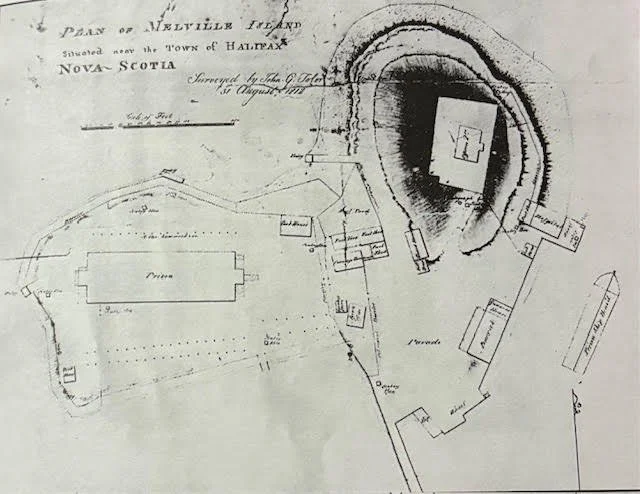
Fig. 2: Plan of Melville Island Situated Near the Town of Halifax Nova Scotia by John G. Toler, 1812. [4]
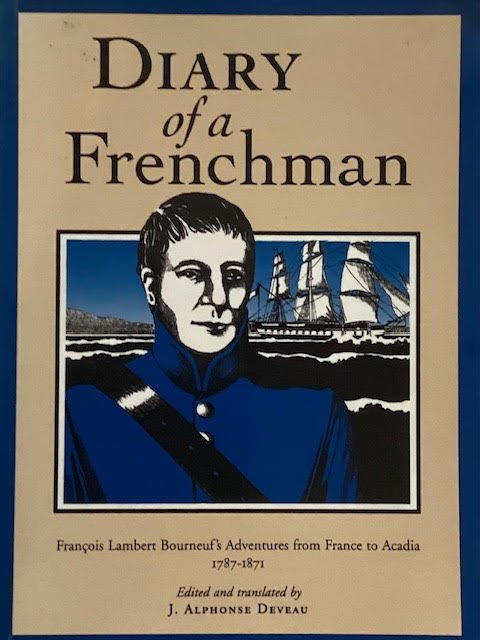
Fig.3: The Source of Francois Bourneuf’s Narrative.
A Narrative of Incarceration on Melville Island
Francois Bourneuf was a 22-year-old seaman on the French frigate, La Furieuse when he was captured on 6 July 1809 during an action between his ship and the British warship, HMS Bonne Citoyenne. He was brought to Halifax where he was treated for a gun shot injury to his leg, but when sufficiently recovered, he was sent as a POW to the Melville Island Prison. [5] Later in life, he wrote an autobiography [6] which provides a vivid first-person account of prison life on Melville Island.
On arrival, Bourneuf was required to exchange his own clothes for standard prisoners’ garb. The dress code spoke to the realities of his situation. The letters POW were printed in red on the back of his jacket, on the thighs of his trousers and on the front of his shirt. The word “Prisoner” was inscribed on the inside of his shoes.
On surveying his new surroundings, he quickly realized that the security arrangements were formidable. The prison yard was enclosed by sharply pointed stakes, twelve to fifteen feet high and strengthened by cross-pieces. The military surveillance protocol was strict and rigorous. [7] The whole prison was also surrounded by water, which served as a natural barrier to escape. Bourneuf decided to adjust to his new circumstances as best he could.
The prisoners’ living quarters was a large wooden building, which was divided lengthwise into three parts. [8] In the centre was a common area where the prisoners could gather. The other parts were “divided every 8 feet into ‘ports’, each of which housed thirty inmates.” [9] Each port contained a wooden superstructure to which the men attached their hammocks, hanging them up every night and taking them down every morning.
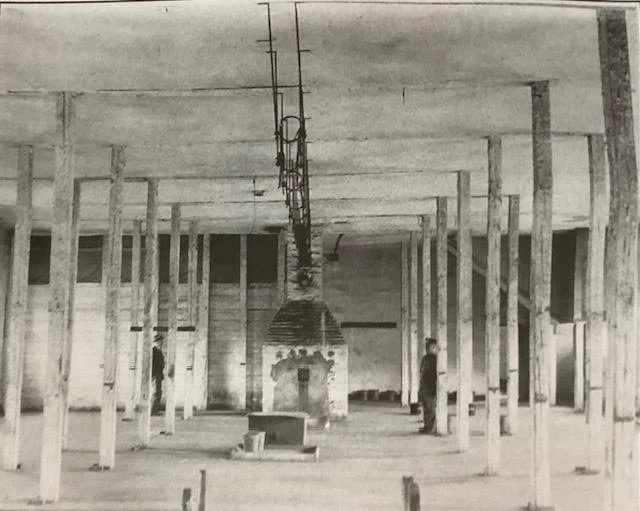
Fig. 4: Interior of the Prisoners’ Barracks. [10]
The living arrangements were highly organized. Rations of fresh bread, a half pound of meat per man, salt and potatoes were received by each prisoner every other day. [11] The men were divided into messes of seven. One member of the mess cooked the rations of meat for all of them on a long spit over an open fire. He then made a large pot of soup from which each man received a spoonful of broth and his portion of meat. According to Bourneuf, “the men cooked stews over small fires in the lee of the wind, in the most convenient places in the prison yard.” [12]
In addition to the issue of clothes, provisions were made for the prisoners’ health and hygiene. For example, in the prison’s kitchen, “there was a large pot to heat water to wash … clothes, and there was hot water every forenoon for those who wanted to wash. [The men] received wood and coal for the kitchen, and in winter [they] received two large stoves and coal to keep [them] warm in the prison.” [13]
Bourneuf’s narrative also speaks of the spirit of conviviality and mutual support he found among the POWS. He described the response of comrades when, after escaping from the prison in August 1811 he was recaptured and confined in a miserable underground cell, known as the Hole, where he was only supplied with bread and water. Bourneuf wrote: “As Frenchmen are generous and sympathetic in these circumstances, they shared their own rations of meat and soup with us.” [15]
Bourneuf had a further advantage within the prisoners’ society. As many as twenty-six of his shipmates were detained on Melville Island until at least 1811, so he could have been sustained by friendships formed earlier while on the Furieuse.
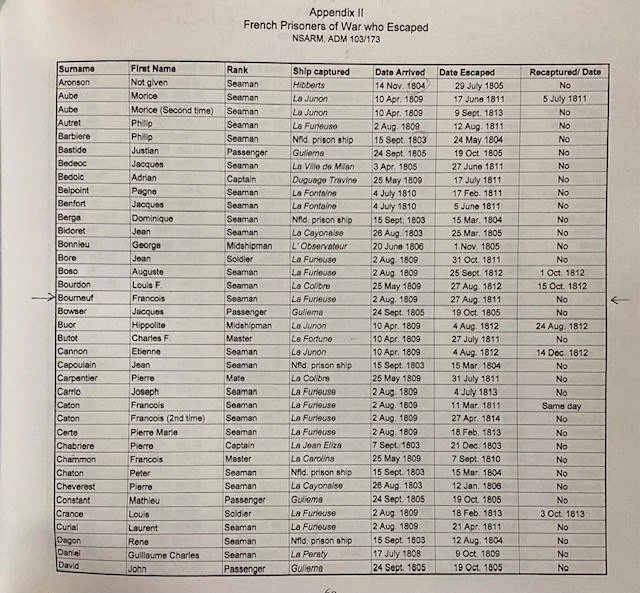
Fig. 5: Admiralty Records of POWs from the Furieuse and other ships. [16]
Although the confinement and regimentation of prison life was endlessly boring, the prisoners found ways to relieve the tedium. Bourneuf wrote with surprise and wonder at the busyness of the many skilled craftsmen among the POWS. “When I arrived all the French men were working, some were knitting stockings, mitts, gloves or purses, and some were spinning. Some were making model battleships rigged with silk and armed with cannons made of pennies. It took almost six months to make some of these models and they sold for as much as $20. Other Frenchmen made hats from birch bark, all kinds of crafts from bones, such as snuff boxes, knives, forks, spoons, dice, dominos.” [17] The prisoners paid for supplies that they needed by arrangement with the jailer. In a single year Halifax butchers supplied 1000 ox bones and farmers supplied 4,000 pounds of wool. [18]
Bourneuf soon became involved in these craft activities, which he found absorbing, lucrative and socially satisfying. He unravelled his white nightcap, wound the wool in a ball and asked one of his companions to teach him how to knit. He had a hook made so he was able to make gloves, which he washed, dyed, and stretched on forms to dry. He began to sell his finished products but soon he realized that items made from bones were selling for much higher prices. He teamed up with three skilled craftsmen who taught him the intricacies of working with bones. Before long, Bourneuf’s English was good enough to sell all the articles they made at the Prisoners’ Market located in the Prison Yard.
The Market thrived because the goods were unusual and attractive and the local population was keen to buy. Visiting Melville Island became a fashionable thing to do in Halifax. Bourneuf observed that “the British visited us in large groups during the week. There were many warships and a large number of troops in Halifax, and few of these officers did not come to visit us, [a]long with their ladies.” [19] “Melville Prison was like a small town fair, especially on Sundays and holidays when it was the favourite resort of the town’s young people, and where a pleasant hour could be passed in conversation with the prisoners while examining the goods for sale.” [20]
Bourneuf’s account of life on Melville Island, as related here, makes the establishment sound like a bearable arrangement, given standards of the day for POW prisons. However, he was also very aware of the much darker aspects of his existence. He wrote of the brutality of punishments, which ranged from incarceration in the Hole to floggings by the guards. The prisoners had their own code of conduct too. As Shea explains: “through their Grand Council the French enforced an internal discipline which was just as brutal as that meted out by the guards. Stealing from one another meant the lash with the cat-o’-nine-tails. Anyone known to have informed on another inmate planning an escape was likely to be taken to a secluded spot, out of sight of the authorities, bound, and then stoned to death by the whole company.” [21]
What became of Francois Bourneuf?
In 1812, aged 24, Bourneuf made a second and successful escape from Melville Island. While outside the prison working on a road crew, he managed to get away and eventually made his way to the Pubnico, a French speaking Acadian area in Argyll County, Nova Scotia. There he taught school. He also decided to stay in the colony, a choice which explains why he took an oath of allegiance to the English King on 20 May 1813. He finally settled in the Grosses Coques area, Digby County, married an Acadian girl, Marie Doucet, in the Fall of 1818, and fathered seven children, 4 sons and three daughters. [22]
Local records show that Bourneuf prospered for many years. He engaged in business as a merchant, ship builder and ship owner. He served as an MLA for Digby County in the Nova Scotia government from 1843-1859. Although his autobiography was written in 1859 for the purpose of informing his constituents of the challenges and successes of his early years, at age 72, his recollections of events fifty years ago may have been selective. However, his vivid description of his experiences on Melville Island remains a unique and valuable document. It is the only known personal account of a French POW in Nova Scotia or elsewhere in Canada, during the Napoleonic War.
Austen Family Associations with Melville Island Prison
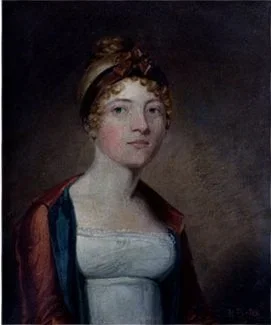
Fig. 6: Fanny Palmer Austen by Robert Field, Private collection.
Among the steady stream of visitors to the POW Market on Melville Island were naval officers and their families. We can never know for sure, but it is possible that this group included members of the Austen family. In 1809 Captain Charles Austen, accompanied by his young wife Fanny, was in Halifax while his ship, HMS Indian, underwent a refit at the Dock Yard. Charles was a kind and considerate husband, the sort of man who would investigate what local entertainment might amuse his wife during what was likely her first visit to Halifax. Fanny’s letters within her family reveal that she was a diligent and canny shopper. [23] Thus a visit to the POW Market with Charles would suit her inclinations and interests.
During the summer of 1810, Fanny was once again in Halifax but Charles had to leave her with Admiral and Lady Warren while he transported troops to Portugal for participation in the Peninsular War. Fanny’s host, the vigorous Lady Warren, was someone who liked to see and be seen. It would be quite in her character to corral Fanny for a visit to the Prisoners’ Market. Her husband, Admiral Warren, was Commander-in-Chief of the North American Station, so he could readily arrange transportation as well as an appropriate escort. It is easy to imagine the unstoppable Lady Warren bargaining for a slew of birch bark sunhats [24] for her family back in England, or for an intricate bone ship’s model for the Admiral’s Christmas present. Maybe Fanny was tempted to acquire a carved child’s spoon for her tiny daughter, Cassy, back at the Admiral’s quarters.

Fig. 7: Captain Charles Austen by Robert Field, Private collection.
Charles Austen likely had a wider interest in the Melville Island prison. He would have known about the recently seized enemy ships that were brought into Halifax, [25] so he had reason to be curious about the destination of the French seamen as POWs. His background knowledge personalized their plight in his eyes. Moreover, Charles had taken the French privateer, La Jeune Estelle, as prize on 19 June 1809. Admiralty records show that one of her seamen, Francis Le Mure, was currently an inmate on Melville Island. [26]
Thiry-five years later, naval officer, Lt Herbert Grey Austen, spent time ashore in Halifax while he was serving under his father, Admiral Sir Francis Austen, Commander-in-Chief of the North American and West Indies Station, 1845-48. Herbert was a gifted amateur artist and he enjoyed sketching local views of historic and aesthetic interest. Melville Island caught his eye.
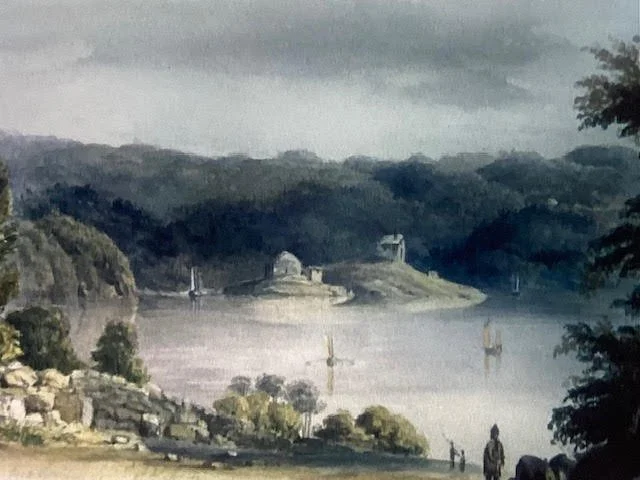
Fig. 8: French Prison Melville Island NWA [North West Arm] by Lt Herbert Grey Austen, 1847. [27]
Herbert chose to depict Melville Island as seen from a position on the eastern side of the North West Arm. His handsome sketch shows two principal buildings - the officers’ house, sited on a high elevation, on the right, and what had been the prisoners’ barracks, located on the left. The landscape on shore is wild and undeveloped, thus giving the impression of rural isolation. In the early 19th century, visitors to the POW market from Halifax ordinarily travelled the short distance across the North West Arm by boat to Melville Island. Herbert’s sketch shows where and how they would have reached their destination.
Contemporary Update.
British military use of Melville Island ended in 1906. Since 1947 the Island has been home to the Armdale Yacht club. The club house, a large white frame building, incorporates the original Officers House which was built in 1808. The former prison’s burial ground, located on an adjacent peninsula, known as Deadman’s Island, has become a Halifax city park. In it there are several informative plaques that identify the diverse inmates of the Melville Island Prison who were incarcerated there after the French POWs.[28] In a prominent place, a monument names the 196 American POWs who died on Melville Island at the time of the American war of 1812-14.
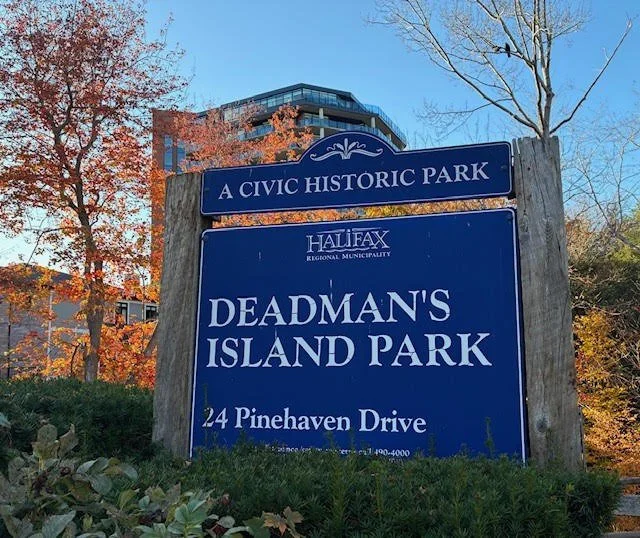
Fig. 9: The Deadman’s Island Park Sign, 24 Pinehaven Drive, Halifax.
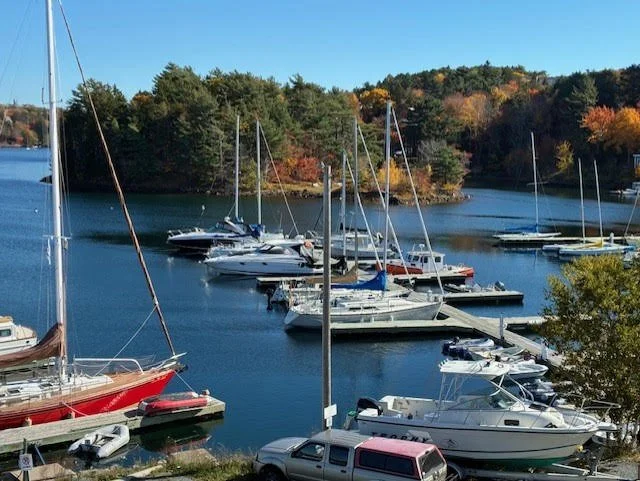
Fig. 10: View of Deadman’s and the North West Arm from Melville Island
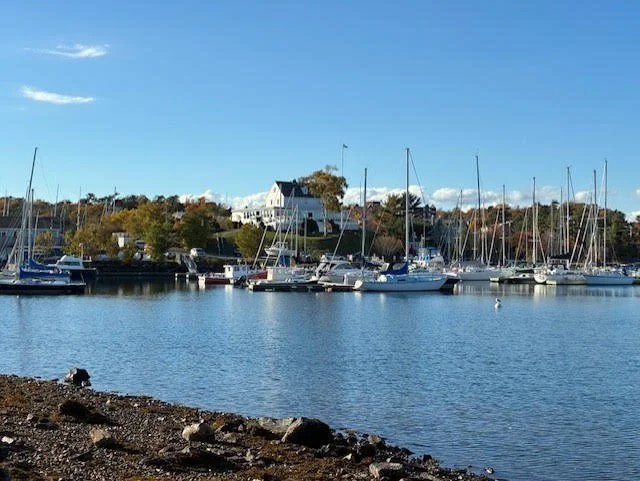
Fig.11: View of Melville Island from Deadman’s Island.

Fig. 12: View of Deadman’s Burial Ground and Melville Island. [29]
Endnotes:
[1] See my earlier blog posts about the Halifax Dock Yard (January February 2020) and naval prize (June2020). See also Kindred, “Two Brothers One City’ in Jane Austen and the North Atlantic, ed. Sarah Emsley, 2006, and Sheila Johnson Kindred, Jane Austen’s Transatlantic Sister, 2017, 2018.
[2] By 1812 the complex also included: three cook houses, a gunners’ house, a turnkey’s house and store, fuel sheds, the agent’s office, a bell house, a guard house, nine sentry boxes, and four privies by the shore washed out twice a day by the high tides. See Shea and Watts, 26 [Hereafter, Shea].
[3] Note the moored Prison hulk and the beginning of a hospital for French prisoners in the fish sheds. Melville Island was then called Kavanagh’s Island. The original watercolour is in the collection of the Art Gallery of Nova Scotia.
[4] NSARM Map Collection, 240-1812/REO A.8. See Shea, 25.
[5] Had he been a naval officer, Bourneuf would have qualified for supervised parole in Preston and Dartmouth. Had he expertise in a practical skill such as stone masonry, painting, carpentry, or some other useful trade he might have been allowed to live and work in Halifax. Such an arrangement would have required him to swear an oath of allegiance to the English King. There is no suggestion that Bourneuf considered this option when initially incarcerated.
[6] See Deveau.
[7] Apart from the difficulty of escaping the prison, there were personal deterrents such as lack of money to buy food and lodging; unfamiliarity with the surrounding terrain, lack of a map for plotting one’s escape route; the harshness of the Nova Scotian climate, in any season other than summer, lack of physical strength to endure the rigours of being on the run, inability to steal a boat in order to escape by water.
[8] It measured three hundred feet long, eighty feet wide and thirty feet high.
[9] According to Bourneuf, “in each port there were posts that reached to the ceiling and between the posts there were cross pieces, about six feet apart to which we attached our hammocks. There were also similar cross pieces which served as ladders to our hammocks. Those who slept higher risked breaking their necks, but they got use to it.” Deveau, 42-3.
[10] Dated 1929. NSARM Photograph Collection.
[11] Each mess had the right to object if they received rations of inferior quality and they were given replacements.
[12] Deveau, 51. Sometimes the inmates fished through the spaces between the stakes enclosing the prison yard or bought from local fishermen who came to the prison to sell their catch.
[13] Deveau, 43.
[14] The Hole was in the cellar under the prison. Daylight was visible only through a small opening above the door.
[15] Deveau, 50.
[16] NSARM ADM 103/173. See Appendix II as transcribed in Shea, 69-72 and 75-76.
[17] Deveau, 38. Other special tradesmen offered their skills. Jewellers, shoemakers, carpenters, schoolteachers, painters, dancing masters and music masters were in business. They willingly took commissions from Halifax townspeople.
[18] See Cuthbertson, 19.
[19] Deveau, 40.
[20] Cuthbertson,18, referring to Akins,156-157.
[21] Shea, 21-22.
[22] Bourneuf was introduced to the Doucet family by a former fellow POW, Jean Moore, from the ship Julilana. Moore had been incarcerated on Melville Island since 28 July 1808. See NSARM ADM 103/173, Shea, 76. Bourneuf’s autobiography stopped in 1818 at the time of his marriage.
[23] For example, writing to her sister in Bermuda, Fanny gives a full report:” I have executed your commissions the best of my ability. … I ventured to get you two pairs of black kid shoes (though you did not desire it) as they were rather cheap and very good.” Kindred, Transatlantic Sister,13.
[24] According to Bourneuf, a large quantity of birch bark hats was made by the POWs as there was a steady market for them in the West Indies.
[25] Charles was serving on the North American station when the French ships, Le Observateur, La Colibre, La Peraty and La Junon were taken as prize. He was even in Halifax at the Naval Yard when Bourneuf and the other seamen from the Furieuse arrived as captives in Halifax.
[26] See Shea, 71. In the original document, La Jeune Estelle is misspelled as La Jeanne Estelle.
[27] Austen’s sketch of Melville Island is from the cover image of Deadman’s by Shea and Watts. The original is in a private collection.
[28] See also Shea, 24-37; 42-46; 51-58.
[29] I am grateful to Brian Cuthbertson, Michele Raymond, Iris Shea and Heather Watts for their extensive research and publications about Deadman’s Island and the Melville Island Prison.
Photo credits:
Fig.3 and Figs 9-12 by Shelia Johnson Kindred
Bibliography:
Cuthbertson, Brian. Melville Prison Deadman’s Island: American and French Prisoners of War in Halifax 1794-1816. Halifax: Formac, 2009.
Deveau, J Alphonse, editor and translator. Diary of a Frenchman: Francois Lambert Bourneuf’s Adventures from France to Acadia 1787-1871. Halifax: Nimbus 1990.
Kindred, Sheila Johnson, “Two Brothers One City’ in Jane Austen and the North Atlantic, ed. Sarah Emsley 2006. Jane Austen Society, 2006.
Kindred, Sheila Johnson. Jane Austen’s Transatlantic Sister: The Life and Letters of Fanny Palmer Austen. Montreal: McGill Queens University Press 2017, 2018.
Shea, Iris and Watts, Heather. Deadman’s: Melville Island and its Burial Ground. Glen Margaret: Glen Margaret 2005.
Watts, Heather and Raymond, Michele. Halifax’s North West Arm: An Illustrated History. Halifax: Formac, 2003.